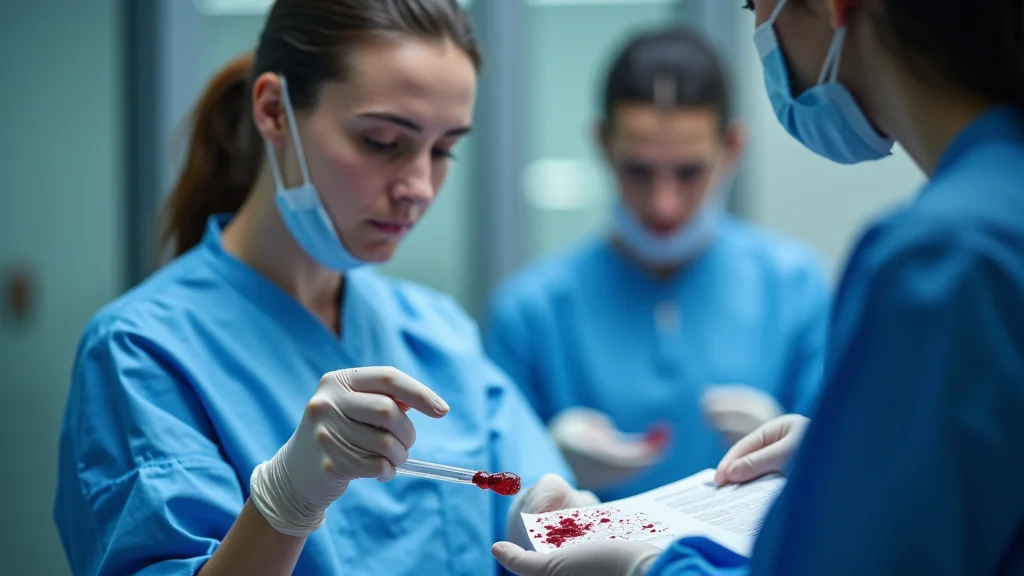
Imagine you’re watching a crime show, and the investigators are examining a crime scene. You’re fascinated by how they analyze bloodstains to piece together what happened. If that sparks your interest, you might be considering a career as a blood spatter analyst. This guide will explore the steps, skills, and knowledge you need to pursue this exciting field. You’ll learn about the education requirements, the types of training available, and what a typical day looks like for a blood spatter analyst. Get ready to gain insights into this fascinating area and discover if it’s the right career path for you.
The Science of Bloodstain Pattern Analysis
Bloodstain pattern analysis, also called blood spatter analysis, is a specialized area within forensic science. It involves studying the shapes, sizes, and distribution of bloodstains at a crime scene. These patterns can reveal crucial details about the events that occurred. This information helps reconstruct what happened, including the type of weapon used, the sequence of events, and the movements of the victim and perpetrator. The evidence collected provides valuable data for investigators and can be presented in court.
What Bloodstain Patterns Can Tell Us
Bloodstains are not just random splatters. A trained analyst can interpret them to determine various details. This information provides a more complete picture of the crime. By examining these patterns, analysts can contribute to the justice system by providing objective information. This data plays a role in convictions and, in some cases, can even exonerate the wrongly accused. The analysis process requires knowledge of physics, mathematics, and biology, as well as a keen eye for detail and the ability to think critically.
- Impact Angle: The angle at which blood strikes a surface can be determined by measuring the dimensions of the stain. This calculation helps investigators determine the position of the victim or source of the blood relative to the surface the blood landed on. For instance, if a bloodstain is elongated, the analyst can measure the length and width to calculate the angle of impact.
- Point of Origin: Using the impact angles of multiple bloodstains, analysts can trace back to determine where the blood originated. This is often represented as a three-dimensional area, which gives investigators a clearer sense of the location of the event. To determine this, analysts use trigonometry and often specialized software.
- Mechanism of Injury: Different mechanisms, such as blunt force, gunshot, or stabbing, create distinct patterns. Examining these patterns helps in classifying the type of weapon or force used. A gunshot wound, for example, often results in a fine mist of blood, while a blunt force trauma might produce larger stains with a more defined shape.
- Movement of People and Objects: The direction and pattern of bloodstains can indicate the movement of the victim, perpetrator, or objects during the crime. For example, if bloodstains are found on a wall and then again on the floor, it indicates movement. The pattern can also indicate if the perpetrator moved the victim.
The Tools and Techniques of the Trade
The tools and techniques used by a blood spatter analyst are both scientific and practical. They must be experts with specialized equipment. They must also use their observations to make informed conclusions about the events that happened at the crime scene. From basic rulers and protractors to advanced software, a thorough understanding of each element is essential for success in this role.
- Measurement Tools: Precision is vital. Analysts use rulers, protractors, and lasers to measure the size, shape, and angles of bloodstains. Measurements are the foundation of any analysis. Accurate measurements are essential for determining the impact angle and point of origin.
- Photography: Photographs are a critical part of the process. High-quality photography captures the overall scene and the details of individual bloodstains. Photographs help to preserve the evidence. These images are essential for documenting the evidence, illustrating the findings in court, and for further analysis.
- Software: Specialized software is used to analyze patterns and calculate the point of origin. This software uses mathematical formulas to help analyze patterns. Some software can create three-dimensional models of the scene. This helps investigators visualize the events.
- Chemical Tests: Presumptive tests, like luminol, can detect trace amounts of blood that are not visible to the naked eye. Luminol reacts with the iron in blood, producing a glowing effect. This helps locate hidden bloodstains. The use of chemical tests needs to be done with care.
Educational Path to Becoming a Blood Spatter Analyst
Becoming a blood spatter analyst requires a solid educational foundation. This foundation includes a bachelor’s degree in a relevant field. The combination of coursework, practical experience, and certifications provides the knowledge and expertise needed to work in this demanding field. The path combines knowledge of science and the practical application of investigative techniques.
Recommended Degree Programs
Several degree programs can provide the necessary background. The coursework covers a variety of subjects. This prepares the analyst for the complexities of bloodstain pattern analysis. The field requires critical thinking skills. It also requires the ability to apply scientific principles.
- Forensic Science: A degree in forensic science offers a comprehensive understanding of crime scene investigation, evidence collection, and analysis. Coursework covers all areas of forensic science. This includes bloodstain pattern analysis, trace evidence, and criminalistics. A bachelor’s degree in forensic science provides a strong foundation.
- Criminal Justice: A criminal justice degree can provide a good base. Coursework in criminal justice provides a general knowledge of law enforcement, legal proceedings, and the criminal justice system. A bachelor’s degree in criminal justice can be a pathway to bloodstain pattern analysis.
- Biology or Chemistry: A degree in biology or chemistry offers a strong understanding of scientific principles. Coursework focuses on areas that are key to the science. These include cellular biology, genetics, and analytical chemistry. This provides a scientific background for understanding blood and blood patterns.
- Related Fields: Other fields, such as mathematics, physics, or anthropology, can also be beneficial. A degree in any of these areas can be useful. These degrees help develop analytical and problem-solving skills that are essential in this area.
Gaining Experience and Building Skills
Alongside formal education, gaining hands-on experience and building essential skills is essential. The experience helps to translate academic knowledge into practical application. This is what helps analysts prepare for the realities of working in this field. Opportunities include internships, workshops, and continuing education. It’s a combination of education, experience, and certifications.
- Internships: Internships with law enforcement agencies, forensic labs, or medical examiner’s offices provide valuable real-world experience. Interns have the chance to apply what they have learned in a professional setting. Internships also give exposure to different aspects of forensic science.
- Workshops and Training Courses: Specialized workshops and training courses focus on bloodstain pattern analysis. These courses provide targeted instruction and hands-on exercises. Training includes practical exercises using bloodstain simulations. These courses are often taught by experts in the field.
- Certifications: Certifications, such as those offered by the International Association of Bloodstain Pattern Analysts (IABPA), can validate your skills and knowledge. Certification indicates a level of expertise. It helps in career advancement. Certification helps boost your credibility.
- Continuing Education: The field of forensic science is continuously evolving. It’s important to stay current. This includes keeping up to date on new techniques. It also includes taking refresher courses. Professional development is key for a successful career.
Career Options and the Work Environment
A career as a blood spatter analyst offers various career paths and work environments. Most professionals work in crime labs, medical examiner’s offices, or law enforcement agencies. Each setting brings unique rewards and challenges. Understanding the different options can help you make an informed decision about the best path for your career. The nature of the work is both challenging and rewarding, often contributing to justice.
Common Work Settings
The work environment for a blood spatter analyst can vary greatly depending on their employer. The work environment impacts the types of cases they will work on. Analysts are expected to adapt to the demands of their environment.
- Crime Labs: Many analysts work in crime labs. They work as part of a larger forensic team. Crime labs provide a controlled environment for analyzing evidence. The analysts are often responsible for analyzing evidence from crime scenes.
- Medical Examiner’s Offices: Analysts may work with medical examiners. They assist in death investigations. This can include examining bloodstains in relation to the cause and manner of death. Working in a medical examiner’s office often involves a close working relationship with medical professionals.
- Law Enforcement Agencies: Some analysts are employed by law enforcement agencies. Their job is to support investigations. They often work on-site at crime scenes to collect and analyze bloodstain evidence. They work alongside detectives and other investigative staff.
- Private Consulting: Experienced analysts may work as consultants. They provide expert analysis and testimony. Private consultants offer their services to law firms, insurance companies, and other organizations. Consulting offers greater flexibility but can be highly demanding.
Responsibilities and Daily Tasks
The daily tasks of a blood spatter analyst involve a combination of field work, laboratory analysis, and report writing. They work on a variety of cases. The analysts must balance different elements of their job. Each day brings a new set of challenges and the opportunity to make a difference.
- Crime Scene Investigation: This is a core responsibility. The analyst visits the crime scene to document and analyze bloodstains. They often have to work in challenging environments. This requires a level of physical stamina and adaptability. This also involves securing the scene to preserve evidence.
- Laboratory Analysis: Analysts perform detailed analysis of bloodstains in a laboratory setting. This involves using various techniques. These techniques allow analysts to collect and examine evidence. The laboratory work requires attention to detail.
- Report Writing: The analyst must compile their findings into detailed reports. Clear and concise reporting is essential. These reports are often used in court. Reports must be accurate and understandable.
- Testifying in Court: Analysts may be called to testify as expert witnesses. This involves presenting findings in court. They explain their analysis to a judge and jury. This requires strong communication skills. They must be able to present the evidence clearly.
Essential Skills and Personal Traits
To succeed as a blood spatter analyst, you need a combination of skills and personal qualities. These traits contribute to success. This is a field that rewards those who are thorough, analytical, and possess a strong ethical compass. These qualities help in building a reputation.
Key Technical and Analytical Skills
Analytical skills form the foundation of a successful career. A keen eye for detail, the ability to work with precision, and a scientific mindset are all necessary. The work requires both scientific and technical expertise.
- Attention to Detail: Bloodstain patterns are complex. The ability to observe details is essential. Analysts must identify and document every stain. They should be aware of every element.
- Analytical Thinking: The analyst must interpret the patterns. They apply scientific principles. They must be able to think critically to draw conclusions. The work requires the ability to examine information and use it to reach conclusions.
- Mathematical Skills: Bloodstain analysis involves using math. Trigonometry and geometry are essential. Analysts use calculations to determine angles and points of origin. Understanding the mathematical concepts is key.
- Knowledge of Forensic Science: Bloodstain analysis relies on knowledge of forensic science. This includes an understanding of evidence collection. The analyst must understand the role of forensic science. They also need to know the principles of forensic science.
Important Personal Attributes
Beyond technical skills, certain personal qualities are crucial for success. These attributes allow the analyst to handle the stress. These traits help with handling sensitive information. A combination of resilience, a strong work ethic, and a commitment to justice is important.
- Objectivity: Analysts must remain neutral. They should be able to set aside their personal beliefs and biases. Objectivity ensures that analysis is based on evidence. It also ensures the evidence will stand up in court.
- Communication Skills: Analysts must communicate their findings clearly and effectively. This involves speaking and writing skills. This is essential for explaining complex information. They need to explain it to non-experts. Good communication skills are essential.
- Emotional Resilience: The analyst will be exposed to graphic crime scenes. It can be emotionally challenging. Resilience helps analysts cope with the emotional toll of their work. They must manage stress and maintain a professional demeanor.
- Ethics: This work demands integrity. Analysts must adhere to the highest ethical standards. This is essential to ensure the reliability of the evidence. They must present the facts honestly and fairly. They must work with transparency.
Frequently Asked Questions
Question: What is the typical salary for a blood spatter analyst?
Answer: Salaries vary based on experience, education, and location. However, the average salary is in the range of $55,000 to $85,000 per year.
Question: How long does it take to become a blood spatter analyst?
Answer: The path to becoming a blood spatter analyst usually takes 4-6 years. This includes completing a bachelor’s degree and gaining practical experience. Training and certifications can take additional time.
Question: Is a master’s degree required to become a blood spatter analyst?
Answer: While a master’s degree isn’t always required, it can improve your career prospects and open the door to advanced roles. More specialized positions will often require it.
Question: What are the main challenges in this profession?
Answer: The job can be emotionally challenging. Dealing with graphic crime scenes and the pressure of presenting evidence in court are demanding aspects of the job.
Question: What are the main differences between blood spatter analysis and forensic science?
Answer: Blood spatter analysis is a specialized field within forensic science. Forensic science encompasses a broader range of disciplines, including trace evidence, DNA analysis, and toxicology.
Final Thoughts
Exploring the role of a blood spatter analyst reveals a career path that combines science, critical thinking, and a dedication to justice. This profession requires a strong educational base, hands-on training, and personal attributes like attention to detail and objectivity. From crime scene investigations to lab analysis and court testimony, the responsibilities are diverse and demanding. It is also rewarding. The analysts contribute to resolving cases and bringing closure to those impacted by crime. If you find the details of bloodstain patterns captivating, the path offers a chance to explore a fulfilling and impactful career. Consider the steps and requirements, and if your interests match the demands of this complex field, it could be a rewarding career to explore.

